
info@cngoldensea.com
+(86)15122654356
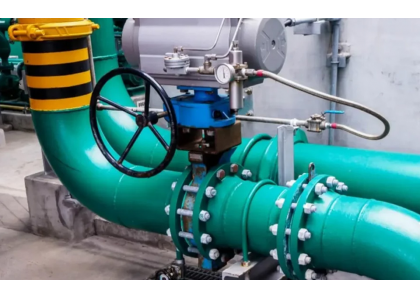
As a type of valve that controls fluid flow through the rotation of a disc-shaped valve disc, the butterfly valve, with its compact structure, rapid opening and closing, and flexible adjustment capabilities, holds a significant position in industrial pipeline systems. Its applicable working conditions cover a wide range from low-pressure water treatment to high-temperature and high-pressure chemical processes.
1. Technical characteristics determine the basic application scope
The core structure of the butterfly valve consists of the valve body, valve disc, valve stem, and sealing components. The valve disc rotates 90° around the axis to achieve full opening or full closing. This design naturally makes it suitable for the following working conditions:
Low-pressure large-diameter scenarios
Due to the flow resistance coefficient of the butterfly valve being approximately three times that of the gate valve, its pressure loss characteristics require the system pressure to be ≤ 40 kilograms. However, the advantages of short structure length and light weight make it the preferred choice for DN50 - 4800mm large-diameter pipelines.
Rapid opening and closing requirements
The characteristic of being able to complete opening and closing in 1/4 turn makes it excellent in scenarios requiring frequent operation.
Bidirectional sealing requirements
The butterfly valve can achieve zero leakage in both directions through the full circumferential contact between the valve disc and the valve seat.
2. Industry practice verifies the application boundaries
The requirements for butterfly valves in different industrial fields vary significantly. Typical application scenarios include: Water treatment industry
The flap valve accounts for over 60% of the municipal water supply and drainage systems, and its rubber seals can withstand water temperatures below 150℃.
Energy sector
Power station boiler feedwater systems use high-temperature flap valves, with a working temperature of up to 600℃.
Chemical process
The three-seal flap valve has successfully replaced traditional ball valves in the chlor-alkali industry.
Three. Key selection based on medium characteristics
The adaptability of the flap valve to the medium depends on the sealing material and structure:
Clean medium
Soft-seal flap valves (EPDM/NBR) are suitable for domestic water, circulating cooling water, etc. After being used in a cooling water system of a data center, the annual water-saving rate reached 15%.
Solid-containing medium
Multi-layer metal-sealed flap valves can handle slurry, mineral slurries, etc. After being applied in the tailings transportation pipeline (with a solid content of 40%) of a beneficiation plant, the valve blockage rate decreased by 80%.
Corrosive medium
Flap valves with fluorinated materials (PTFE/PFA) perform well in strong acid and alkali environments. After being used in a sulfuric acid transportation pipeline (concentration of 98%) in a chemical plant, the valve replacement cycle was extended from 6 months to 3 years.
Food and medicine
Flap valves with 316L stainless steel and silicone seals meet GMP requirements. After being used in the purified water system of a pharmaceutical factory, the microbial detection pass rate increased to 100%.
Four. Solutions for special conditions
For extreme conditions, the flap valve technology continues to make breakthroughs:
Low-temperature environment
Flap valves with low-temperature steel (LCB/LC3) bodies and enhanced PTFE seals have been successfully applied in a liquid nitrogen system at -196℃.
High-pressure scenarios
By strengthening the valve body wall thickness and improving the sealing structure.
Wear resistance requirements
Flap valves with surface hardening of hard alloy have a lifespan five times that of traditional valves in a coal powder transportation system (flow rate of 25m/s).
Goldensea is one of the Global leading water valve suppliers and ductile iron butterfly valve manufacturers, which was established in the year 1991. The main products are butterfly valves...[ read more ]


