info@cngoldensea.com
+(86)15122654356
I. Core Structure
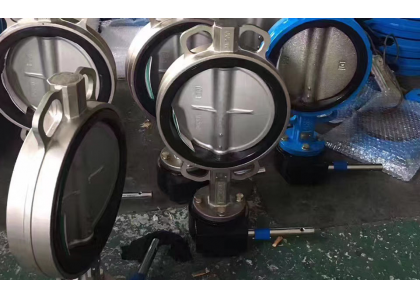
Valve body: Made of cast iron, cast steel or stainless steel to ensure strength and corrosion resistance.
Diaphragm plate: Streamlined design to reduce fluid resistance. The surface can be lined with rubber (such as nitrile rubber, ethylene propylene diene monomer rubber) or welded with stainless steel, and it cooperates with the valve body sealing surface to achieve opening and closing.
Sealing ring: Made of soft materials such as rubber or tetrafluoroethylene, embedded on the valve body or attached around the diaphragm plate, ensuring excellent sealing performance when the valve is closed.
Worm gear worm drive mechanism:
Worm: Fan-shaped gear structure, directly connected to the valve stem of the butterfly valve, driven by the rotation of the worm gear to achieve the rotation of the valve stem by 90° (some models support 360°), realizing the opening and closing of the diaphragm plate. During the rotation process, the contact area between the diaphragm plate and the sealing ring gradually changes, thereby achieving the opening and closing of the valve. The design of soft sealing materials and worm gear structure enables the valve to have excellent sealing performance when closed.
II. Working Principle
The worm gear worm drive mechanism drives the valve stem to rotate 90° (some models support 360°) by the rotation of the worm, realizing the opening and closing of the diaphragm plate through the action of the worm gear and the fan-shaped gear. During the rotation process, the contact area between the diaphragm plate and the sealing ring gradually changes, thereby achieving the opening and closing of the valve. The design of soft sealing materials and worm gear structure ensures excellent sealing performance of the valve when closed.
III. Performance Advantages
Reliable sealing performance: The design of soft sealing materials and worm gear structure enables the valve to have excellent sealing performance when closed, effectively preventing medium leakage.
Effort-saving operation: The reduction ratio of the worm gear worm mechanism amplifies the input torque of the handwheel, reducing the operating torque and making the operation more effortless and agile.
Quick opening and closing: The rotation of the diaphragm plate by 90° can achieve full opening or full closing, with quick opening and closing, facilitating rapid adjustment of the flow rate.
Installation is convenient: It can be installed at any position, easy for maintenance, and has diverse connection forms, including flange and socket type, adapting to the needs of different pipeline systems.
Strong corrosion resistance: The rubber sealing ring can withstand various corrosive media, and the stainless steel valve body is suitable for media containing chloride ions, extending the service life of the valve.
Low flow resistance: The full diameter design has a low flow coefficient, suitable for large flow conditions, reducing pressure loss when the fluid passes through, and saving energy.
IV. Application Scenarios
Petrochemical industry: Used in pipeline systems for transporting corrosive media (such as acids, alkalis, salts).
Electric power industry: Used in the flow control of power plant circulating water systems.
Water treatment industry: Used for flow regulation and cut-off in urban water supply and drainage systems, as well as in sludge and wastewater transportation pipelines in sewage treatment plants.
Construction field: Used for flow regulation in central air conditioning chilled water and cooling water systems.
Metallurgy, building materials, mining and other fields: Used for gas medium flow and pressure control, such as ventilation and environmental protection engineering of dust-free cold air or hot air gas pipelines.
Goldensea is one of the Global leading water valve suppliers and ductile iron butterfly valve manufacturers, which was established in the year 1991. The main products are butterfly valves...[ read more ]


